Labels

Comments

I LOVE comments, so please, if you have an opinion or would like to ask a question, do so. But do check back as I shall answer any questions in the comments of the relevant post - that way, everyone can benefit from everybody's knowledge and advice.

Monday, 23 May 2011

Feet!

Apologies for the long delay in getting the promised 'foot care' post online.  Needless to say, with two allotments and the garden to boot, time is very limited at this time of year.... and if you could see the state of my feet you would wonder why I bother to post this at all!  So, it is a timely reminder to myself as well... that you really should take more care of your feet.


Pedicure

Because we often neglect them, and because they take a lot of hard wear and tear, it is true to say that many of us have particularly ugly feet.  You can be honest with yourself, look at your naked feet and decide, are they pretty or not?  If you decide the latter then it is very important to follow a foot care routine for at least 3 months in order to bring your feet up to the healthiest condition possible.  Even if you decided that your feet are pretty, in order to keep them that way a foot care routine is important.

  1. Wash your feet carefully when in the shower or bath (daily foot washing is important, twice daily if you suffer from athletes foot or any other foot maladies.  At least once a week soak the feet in a warm bath and use a pumice stone to remove dry dead skin on your heels.  Do not scrub overly at hard skin, it has taken a long time to build up and will not disappear after only one or two soakings, this will take time to remedy.  There are no shortcuts, you are in this for the long haul!  You can buy some pretty powerful creams to remove this dry skin however they also take diligence in application on a daily basis and if you stop using them the dry skin returns fairly quickly - one winter will show your feet to be the same as before, so it is wise to get into a footcare habit and simply stick to it.

  2. Occasionally you may prefer to use a sugar scrub on your feet.  This will moisturise and help remove loose flaky skin cells.  Once a month it is a good idea to use a foot mask.  This is exactly the same as using a face mask only you will choose ingredients for very dry skin.  Pop the feet in a plastic bag and put them up for 20 minutes while you watch tv or catch up on some light reading.

  3. Rinse off the foot mask with warm water and dry the feet very carefully.  Pay particular attention to the area between the toes.
     
  4. Now moisturise the feet with a rich cream or oil.  Or ask a partner or friend to do it for you, a foot massage can be very relaxing.  Raw Shea Butter is excellent for this purpose and if used at bedtime will work its magic during the night while you sleep.  It isn’t necessary however to buy a special cream or lotion for the feet, any vegetable oil such as olive, sunflower or rapeseed will work almost as well – you may need a couple of applications before bed to achieve the same results.  A pair of light cotton socks can be worn to bed to save the sheets getting oily!

Sugar Scrub for Feet

A quantity of dark brown sugar (about a handfull will do)
Vegetable oil to moisten (just enough to make the sugar like wettish sand)
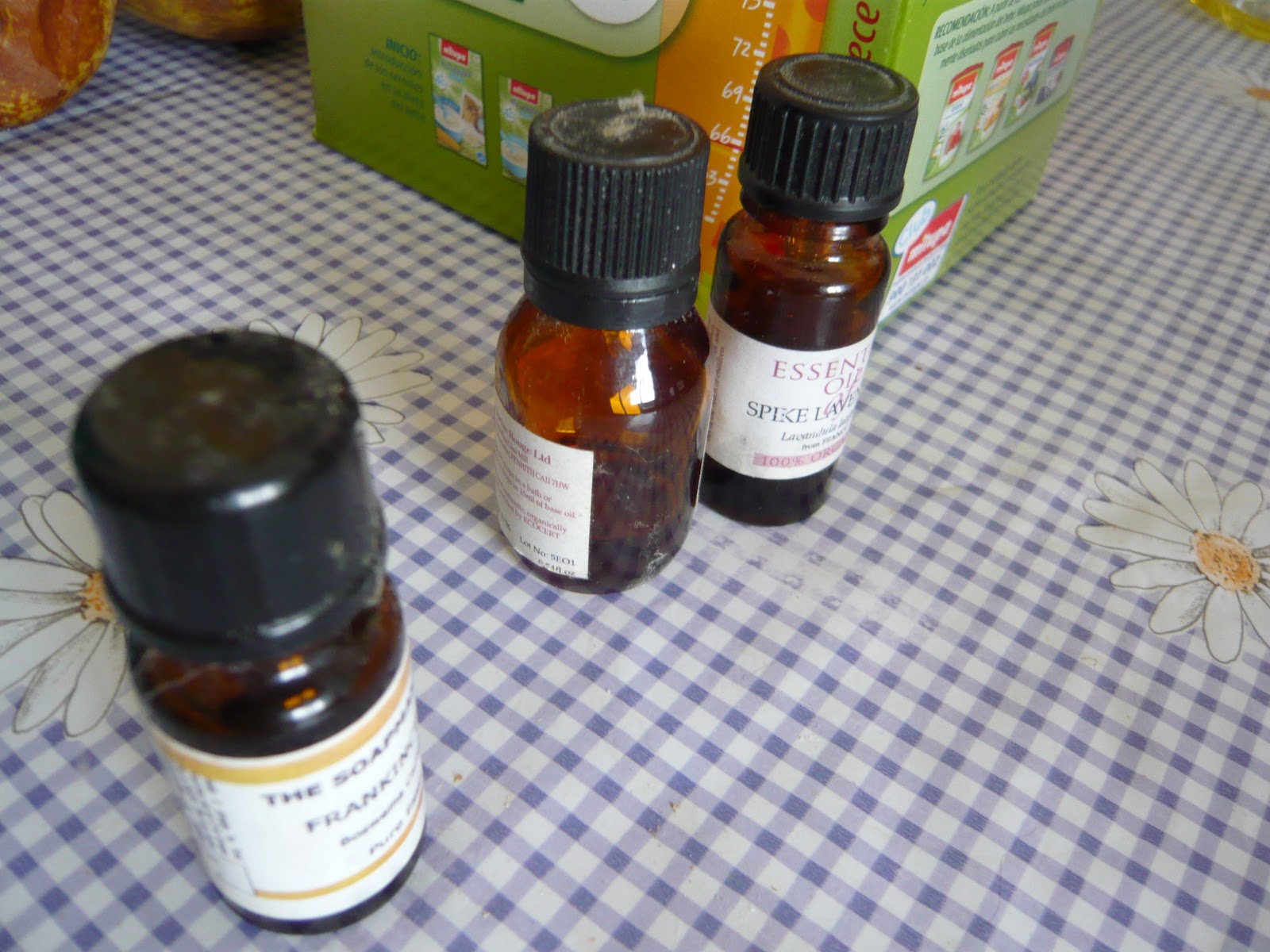
4 or 5 drops of peppermint essential oil (or find a different blend to your liking - look up the essential oil links on this site for some suggestions)

Mix these ingredients together and leave covered in a bowl for a few hours to allow the essential oils to infuse properly.  Then massage the mixture onto wet feet paying particular attention to your heels and any areas of dry skin.  Take your time to do this (it is better to be sat on the edge of the bath with your feet in the bath or in the shower).  Finally, rinse your feet with warm water and pat them dry.  Follow with a good moisturiser or a moisturising foot mask.

Foot Mask Recipe 

20g Clay (Argiletz, Dead Sea Mud or Rhassoul)
1 tablespoon Jojoba Oil
Enough warm water to mix to a paste
A few drops of essential oil of your choice
To Vary
1 egg yolk and a tablespoon of honey
or
A handful of organic oats

Mix the oil into the clay and then add enough water to make a paste.  Add any extra ingredients if desired and mix well.  Apply to damp previously soaked feet, pay particular attention to areas of dry skin.  Leave for 20 minutes and then rinse.

Toe Nails
If you have ugly feet you may prefer to keep your nails as natural as possible so as not to draw too much attention to them.  Careful choice of summer shoes or style of sandals can go a long way to disguising unattractive feet.  Take the opportunity to try on lots of different styles, even ones that you normally wouldn’t want to wear.  Always look in a mirror rather than straight down at your feet to ascertain the full affect.

If your toenails are especially thick you may wish to soak the feet BEFORE cutting and filing them, however if it is easier, you may cut and trim the nails first and soak the feet afterwards.  The choice is yours.  To avoid problems with in-growing nails always cut straight across the nail.  The length of nail you leave is again your choice but for comfort when wearing shoes and socks the nail shouldn’t extend beyond the end of the toes.  File any rough edges left by the scissors or clippers.

Rub a little nail oil (recipe below) onto the surface of your nail and allow it to soak in for a few minutes.  Gently push the cuticle down to expose as much nail as is comfortable.  The surface of the nails can be polished in exactly the same way as the nails on the hand.  Buff them up vigorously for a few minutes and try on your sandals and look in the mirror.  If you decide that you would prefer a higher shine on your toes then you could apply some nail lacquer.  Clear nail varnish is pretty without drawing too much attention to the feet.  Or a French manicure, where the ends of the nails are coated with a white varnish, can give a ‘natural’ look. 

Nail Repair Oil

50% Jojoba oil
50% Avocado oil
 A few drops of Essential oils of Carrot seed and Lavender 

Combine the oils together in a bottle and apply frequently to strengthen and condition the nails.  Carrot seed essential oil is expensive but it is possible to get an olive or sunflower oil that has been macerated with carrot, this could be used instead.   
  
If you do apply a coloured varnish remember to remove it after two days and allow your toenails to breathe for at least a day before re-applying.  This is very important, nails that have been painted for too long a time are inclined to turn yellow.

Having fish eat the dead skin from your feet seems to be all the rage at the moment.  It is expensive and I think it must be effective or it wouldn't be so popular, however, I have no direct experience of it so I cannot say for sure - I would be interested in hearing from anyone who has had a go of this novel approach to footcare.  I suspect that afterwards you would still have to continue with a routine in order to keep your feet clear of dead skin so you are still back to square one really.


A Railway Incident
(Home Notes February 1895)

She sat beside me in the train,
Her eyes were shut, her face was fair,
Her lips were red as cherries ripe,
Of soft brown colour was her hair.

Her face a look of sadness wore,
I spied a tear upon her cheek.
Alas! I, too, was sad at heart,
And so resolved to speak.

“Fair maid”, I said, “I, like to thee,
Am suffering from an aching heart,
My sympathy I’d gladly give,
Then pray thy secret woes impart”.

“I thank you kindly, sir,” she said,
“I am enduring pain, tis true,
But tis no trouble with my heart,
It’s only that my boots are new!”

Tuesday, 3 May 2011

More Bicarbonate of Soda

Now that the better weather is beginning and we are considering sandals (well I am) it may almost be too late to start worrying about the look of your feet and toes (if you do want to begin a foot care regime check back regularly because my next post is about footcare).  But if you suffer from Athletes foot then using bicarb as a powder on your feet and between your toes after your shower (dry carefully first of course - even to the point of using a hair dryer on your toes for a few minutes) can be helpful.  As with all natural solutions it can take several weeks of daily application of bicarb to clear up a bad bout of athletes foot.  You should continue the treatment (daily) for several weeks after the affliction appears to have gone, this will help prevent re-infection.  After this a once a week treatment may be sufficient.


Sunburn - to relieve the pain of sun or wind burn.  dissolve 100g of bicarbonate of soda in a tepid bath and soak for about fifteen minutes.  Pat the skin dry and apply an after sun cream.

Bath Bombs - These are very popular nowadays and so easy to make at home - well I say easy, but I have often had problems with getting them to set but if they do crumble it's just as nice to put them in a bag and bash them with a rolling pin into dust - fizzy dust sprinkled onto the bath works just the same as the bath bomb.


Ingredients: 4oz bicarbonate of soda, 2oz citric acid, 1 tsp sunflower oil, approximately 10 drops essential oil. (some other recipes call for dried flowers or lavender buds etc... I hate bits floating in my bath so I leave these out).  A mould - plastic cups or silicone cup cake moulds will work.  I do not like to colour my bath bombs, preferring them natural, but any cosmetic grade colourant will work (most suppliers will advise you on which are the best - but remember when it comes to colour, less is more).  You could even give a little vegetable colourant a try just be aware that it could make your mixture a little wet (in this case work fast and use less vegetable oil).

Method:  Mix the bicarb and citric acid together well.  Add the vegetable oil and the essential oil and mix with your hands until really well incorporated.  The mixture should start to clump together when you squeeze or press it with your hands.  It should still be very crumbly and only sticking together when you squish it very hard.  Begin to pack it into your mould.  You need to really pack it tightly - squishing and squashing. Once you think you have it dense enough leave it somewhere very dry for an hour or two and then carefully remove it from the mould (a bit of gentle tapping should do it) then leave it for 24 hours in a nice dry airy place.  Your bath bomb is now ready to use or to wrap up as a gift.  If youa re giving it as a gift do remember to list the ingredients so that the recipient knows what you have put in it.

Wednesday, 20 April 2011

Bicarbonate of Soda

As I am sure most of you will know, Bicarb is a wonderful thing!  You can use it for all sorts of stuff.  When it comes to cleaning it is an excellent eco friendly product that will shift grease and grime like nobodies business.  Well this sounds great I hear you murmur.  However, what no one tells you is that you need one extra ingredient for bicarb to actually make a good job of it.  That extra ingredient is Elbow Grease.


Sadly there is no way round it, this wonderful ecologically sound method of cleaning your bathroom or kitchen only works if you are prepared to put a great deal of effort into it.  We are not so used to having to actually scrub our floors clean these days.  So many of the products available are simply wipe on and then off again.  Can you imagine how harsh they have to be to work so effectively.


You can leave a paste of bicarb and water smeared onto stubborn dirt or grease and then come back to it after a little while.  This can cut down the scrubbing a bit.  But when opting for any of these old fashioned (albeit eco friendly) cleaning tips be prepared to turn the clock back a hundred years or so and get your sleeves rolled up and your hair tied back. 


And to finish this post... some other things you can do with bicarb that don't require scrubbing. 

Chlorine damage to your hair? : Mix a solution of half a teaspoon of bicarbonate of soda to a pint of warm water and rinse your hair with it, catch the rinse in a bowl or jug and pass it through your hair several times.  This removes any smell of chlorine and can help to redress some of the damage done - but if you insist on swimming on a daily basis then you really need to wear a waterproof hat.  Bicarb can only do so much.


Dull or Dry Skin Exfoliation:  Mix a quarter of a teaspoon of bicarbonate of soda with your usual shower gel or body wash.  Make sure it is well dissolved and then apply to the skin in gentle circular motions.  Rinse well in the shower and pat the skin dry.  Follow with a luxurious body butter or lotion.  This should not be done more than once a week and a lot less if you are inclined to very dry skin.

Remember, bicarb is basically a cleaning product so although it is eco friendly, it can be a bit strong when used as part of a beauty regime.  So use sparingly and with caution.  I do have a multitude of recipes in one of my old notebooks - copied from some ancient publication no doubt.  If I can find it, I will give you a few more tips in another post.

Friday, 15 April 2011

Chamfered Edging on Soap

I always keep a stash of soap here....


...under the sink in the kitchen.  I don't make a dedicated kitchen soap, I tend to use it just for hand washing anyway, so the same stuff that ends up in the shower can be found here.


I keep it in a brown paper bag tightly closed to preserve the scent of the soap.  It works very well and these soaps, which have been here for months and months still smell of orange and lavender.

When I ran the soap company I very seldom had complaints about the soap - once when a very ancient old lady whined about the price (she thought £3 a bar was expensive) she compared my soap to Lux and said that it wasn't any different so why was it so expensive. She wasn't convinced by my explanation about the precious oils and the abundance of natural glycerin.  But that's all by the way... the main complaint I frequently had, was from men, and it suprised me.  They did not like the sharp edges on the soap.  Even though I explained that the edges would soon round down with use, they always screwed up their faces and said how awkward it was to use sharp edged soap.


I firmly believe that chamfering the edges of the soap is firstly, a waste of soap and secondly, a waste of your time - but if you want to please the man (men) in your life then perhaps it's worth it.


This is how you do it.  It's best to do this once your soap has fully hardened, so after curing for at least 4 weeks.  Take a vegetable peeler (a speed peeler as Jamie Oliver calls it) and run it along the sharp edge of the soap.


A thin sliver of soap will come off.  Sometimes they come off in great long curls, sometimes they simply shatter into little shards of soap.


You can do all the edges, vertical and horizontal.  Then you take a clean dry cloth ( a T towel is good) and polish up the surface of the soap until it shines.  You don't believe me when I say the soap will shine?  Give it a go and you will see what I mean.


The soap is then ready to be wrapped or displayed for all to see how pretty it is... and how nice to use.  And you can be sure that the man in your life won't have to put up with any sharp edges on his delicate skin!


Oh yes, and because I don't believe in wasting anything... all those little shards and curls of soap that peeled off, don't throw them away.  Put them in an airtight container and the next time you are making soap, when it gets to trace, chuck them in, give it a stir and then pour into the mould.  Sometimes if I had an underweight coloured bar I used to cut it into little cubes and I would add it to a batch of plain soap so that when it turned out it looked like dolly mixtures in the soap.  If you use your imagination you could make some really interesting combinations.  Just scent the main batch as you would normally (don't worry if the shards of soap are from a scented batch or not, they are too small to affect the smell of the final soap) and then chuck in the little offcuts, stir and pour into your mould.

Monday, 4 April 2011

Some Advice from Great Granny!

Here I have a Family Herald Handy Book entitled HInts on The Toilette with advice on the improvement and preservation of the skin, teeth, eyes, hair, hands, and feet.


Well we could all do with a bit of that I'm sure!

The Skin
On considering the quantity of waste matter continually carried to the the surface of the skin, which, if not removed, will inevitably impede its function, we cannot fail to see the necessity for daily and thorough ablution.  The minute dry scales cast off as waste or refuse from the outer skin, instead of falling away, are kept in contact with the surface of the body, and, becoming amalgamated with the secretions of the skin, form a thin unctuous crust, to which soot, dust, and other particles from the atmosphere, and from our dress, adhere, encasing the entire body with impurities.

If this coating be suffered to remain, the result will be injurious in many ways.  First, the perspiratory pores being obstructed, their function must necessarily be performed by some other organ, which in consequence being overworked, will probably become weak and disordered.  Secondly, the skin will be subject to irritation, both mechanically and chemically, occasioning eruptions; while the saline particles detained on its surface, by their affinity for moisture, will keep it damp and cold, and thus tend to engender diseases by the effect of cold on the system.  Thirdly, it is probably that the pellicle of foreign substances on the skin may form a medium for the detention of poisonous gases, or miasmatic and infectious vapours, which, being absorbed into the system, will be productive of injurious consequences.


Well, Ladies.  I don't know the date of this publication as it is not written on it, however I surmise it to be early to mid Victorian - especially with the references to disease being carried on miasmas.  And apart from the obvious fact that it is a good thing to wash or cleanse daily I don't think we can put much credence in the 'science' behind it.  What is fascinating is that we take it for granted that everyone knows they should wash or cleanse every day... this little book takes it for granted that many people do not know that they should wash or cleanse every day. 

The Eye
Although art has discovered several means of giving lustre to the eye, none can rival nature, and the false lustre, though beautiful, is but transient and injurious.  The most common thing used is belladonna, which cannot be too highly decried.  Health alone, with frequent ablution in cold spring water, or rose-water diluted, will give lustre to the eyes, and those using artificial means will pay for it in after years.

It is hard to believe that girls would go to such lengths as putting a poisonous substance into their eyes... or is it?  I feel the same sense of horror when I hear the word Botox.  In some ways the world has not changed at all, actually that is not true, the world has changed a great deal.  People haven't.


And finally... a recipe from the same book that I approve of.

Eau De Cologne, or Cologne Water 
Take rectified spirits of wine, or the best unsweetened French brandy, one pint; oil of neroly, three-quarters of a drachm (45 drops); oil of rosemary, half a drachm; camphor, half a drachm: one ounce each of oil of lemon-peel and orange-peel; half an ounce of pure bergamot.  Keep the ingredients together for a month; it is then fit for use.


Indeed this will make a very nice, refreshing cologne.  Anyone remember 4711?  Well this would work in a similar way.  You put it on your handkerchief and then wipe your brow or your neck with it and it is delicously cooling in hot weather, as well as being freshly scented.  No, you don't smell of the French Brandy, well not if you have made it correctly you don't.

This particular recipe would be very pricey to recreate (I can't but think it would have been pricey during the 1800's too) but somewhere in among all my books and papers I have a recipe for a modern equivalent... I will see if I can find it for next time.

Sunday, 27 March 2011

Viva Espagne!

Ok, so this post is about some iffy soap I made with friends in Spain.  Why was the soap iffy I hear you ask?  Well.  The whole idea was to make something cheap (therefore using local produce) and pure if possible.  The purpose of the soap was to be twofold - a cleaning product for the kitchen as well as something that you could wash your hands with.  This is a tall order as the two are usually completely separate items.

The lovely people who asked me to teach them to make soap were so enthusiastic about the whole project that we simply 'had a go' with the best ingredients that we could find in the village shop.  Sometimes you just have to do it and see what you get.

The only caustic soda that we could find was this stuff.....


It said on the packet that it was 90% caustic soda and 10% 'other ingredients'.  It did not specify which or what other ingredients were included.  I speculated that this could have been bleach or something equally horrid that you would not want to put on your skin.  Would it even turn into soap I wondered? 

The olive oil, the cheapest we could find at the village shop, turned out to be a rather good quality olive oil that I just knew would take some stirring to turn into soap.  But what the heck... lets see what happens.

Firstly I have to point out the deliberate mistake here and say BAD GIRL JANE.  BAD BAD GIRL!!!  Can you see?

I am not wearing safety goggles.  This is a huge NO NO NO!  and I debated whether to do this post at all because of it.  I hold my hands up, it was entirely my fault, my suitcase weighed in at 19.6kg when I was only allowed 20kg on the plane and I had turfed out of the case all my soap making equipment in favour of toys and clothes for my grand daughter.  So I turned the soap making experience into a very dangerous one by proceeding without the goggles.

The first problem we encountered was that the caustic soda did not entirely dissolve.  The nameless 10% was left solid at the bottom of the jug.  I carefully poured only the dissolved solution into the oils.  This means that I actually was unsure how much caustic soda I was using - likely alot less than the recipe called for (recipe given at the bottom of the post).  since I was pretty confident that it would be less caustic rather than more I thought it was worth continuing.


As predicted it took a lot of stirring.  Then we left it still liquid and had a cup of tea, checking back every ten minutes or so to give it a quick stir. After doing this a couple of times it finally started to come together, when it was the consistency of a nice creamy custard (looked just like creamy custard too!) we stirred in some out of date essential oils that my daughter had knocking about the house.  They still smelled lovely even though they were quite old - lavender and sweet orange in equal quantities. 


We poured the mixture into an empty cardboard box that we lined with greaseproof paper and then we set off for the village bar.  After a couple of hours and a couple of beers we came home and checked on it.  It was still quite runny but it was very carefully transported to Angela and Michele's house.  It was then that I realised that I had forgotten to take a photograph of the finished product.  D'oh! (must have been the beer!)


According to Angela it set beautifully by the following morning and they cut it and left it to cure.  They are now in the UK for a holiday so perhaps when they get back they can take a photograph of the soap and let me have it so I can update you all.

This type of all-olive oil soap is traditionally called a Castile soap after the Castile region in Spain where it was first made.  The final test of how good this soap is - whether it will be suitable for using on the skin or left under the sink for washing the floor will be down to Angela and Michele.  They understand that we don't really know what was in the caustic soda, or if we managed to screen out the 'bad' bits or not.  At the end of the day, if it is used solely as a kitchen cleaner, it is still going to be the cheapest kitchen cleaner you could ever buy... costing only a couple of euro's to make. 

The recipe we used:
1 litre Olive Oil (cheapest we could get)
275g water (weighed)
127g caustic soda

10ml Essential oil

Wednesday, 2 March 2011

Short Break

There will be a short interval (while I go to Spain to visit my daughter and grand daughter) with no posts, but then....

When in Spain I shall be teaching a friend of my daughter's how to make soap - he is keen to only use local produce, which means an all olive oil soap - maybe with rosemary or thyme infusions - I plan to take lots of photographs and I will blog the results.  Give me two - three weeks and then do check back!

Oooh yes I plan to make an antiseptic balm with extra virgin olive oil and wild mountain thyme too!  Sounds so yummy you'd think I was talking about cookery not cosmetics.  See you all soon.